
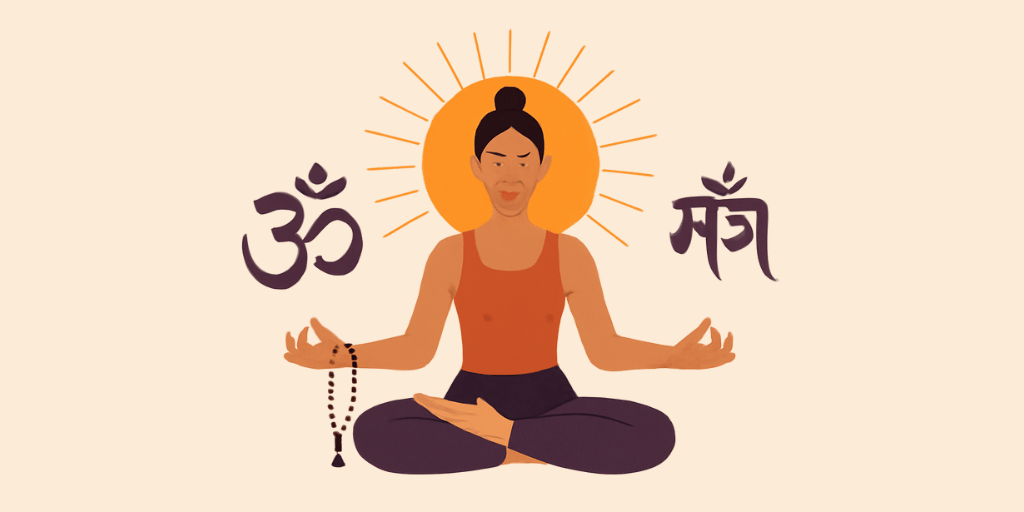
Sanskrit name: मन्त्रयोग
English name: Yoga of Sacred Sounds
Description
Mantra Yoga is a powerful meditative practice that uses sacred sounds and vibrations to calm the mind, enhance focus, and connect with higher consciousness. The word “Mantra” (मंत्र) comes from Sanskrit: “Man” (mind) and “Tra” (tool or liberation), meaning “a tool to free the mind.” This form of yoga revolves around the repetition of specific words, syllables, or sounds, known as mantras, to awaken spiritual energy and inner peace.
With roots in Vedic traditions dating back thousands of years, Mantra Yoga has been an essential practice in Hinduism, Buddhism, and Jainism. The Om (ॐ) mantra, for example, is considered the primordial sound of the universe, symbolizing the connection between the individual and cosmic energy. Ancient yogis believed that chanting mantras purified the mind, balanced emotions, and activated higher states of consciousness.
Medical Conditions(Relief)
- Anxiety and Stress: Engaging in mantra yoga can help reduce anxiety levels and alleviate stress by promoting relaxation and mindfulness.
- Depression: The practice can enhance mood and emotional well-being, serving as a supportive tool for individuals dealing with depressive symptoms.
- Chronic Pain: Mantra yoga may assist in managing chronic pain by encouraging a focus on breath and meditation, which can lead to a greater sense of control over pain perception.
- Sleep Disorders: Regular practice can improve sleep quality and help with insomnia by calming the mind and body, making it easier to fall asleep.
- Hypertension: The meditative aspect of mantra yoga can contribute to lower blood pressure by inducing a state of relaxation and reducing stress responses.
- Digestive Issues: The gentle movements and breath control can aid digestion and alleviate symptoms related to gastrointestinal disorders.
- Respiratory Conditions: Mantra yoga can improve lung function and breathing patterns, benefiting individuals with asthma or other respiratory issues.
- Post-Traumatic Stress Disorder (PTSD): The combination of mantra repetition and mindfulness can help individuals process trauma and reduce symptoms associated with PTSD.
- General Well-Being: Overall, mantra yoga promotes a sense of balance and wellness, positively impacting mental and physical health.
Medical Conditions(Avoid)
- Severe Back Pain or Injuries: Individuals with acute back pain or spinal injuries may find that certain asanas worsen their condition.
- Recent Surgeries: Those who have undergone recent surgeries, particularly abdominal or orthopedic, should refrain from asanas that strain the affected areas.
- Pregnancy: Pregnant individuals should avoid asanas that involve deep twists, inversions, or poses that put pressure on the abdomen.
- Heart Conditions: People with serious heart issues should be cautious with asanas that elevate heart rate significantly or require intense physical exertion.
- Severe Hypertension: Those with uncontrolled high blood pressure should avoid inversions and poses that may cause strain.
- Glaucoma: Individuals with glaucoma should avoid poses that involve inversions, as these can increase intraocular pressure.
- Severe Osteoporosis: Asanas that involve balancing or weight-bearing can pose a risk of fractures for those with severe osteoporosis.
- Recent Stroke or Neurological Issues: Individuals who have had a stroke or have neurological conditions should consult a healthcare provider before engaging in yoga practices.
References
- Patanjali, Yoga Sutras of Patanjali, Commentary by Swami Sivananda. Divine Life Society, 1990; p. 58.
- Swatmarama, Hatha Yoga Pradipika, Edited by Swami Muktibodhananda. Bihar School of Yoga, 1998; p. 72.
- Sushruta, Sushruta Samhita, Commentary by Acharya Y.T. (5th ed.). Varanasi: Chaukambha Orientalia, 1992; p. 445.
- Krishnamacharya, Yoga Makaranda, Translated by A.G. Mohan. Krishnamacharya Yoga Mandiram, 2012; p. 103.
- Iyengar B.K.S., Light on Yoga. HarperCollins Publishers, 1966; p. 102.
- Desikachar T.K.V., The Heart of Yoga: Developing a Personal Practice. Inner Traditions, 1995; p. 88.
- Jois K. Pattabhi, Yoga Mala. The Yoga Institute, 2002; p. 120.
- Swami Vivekananda, Raja Yoga. Advaita Ashrama, 1993; p. 61.
- Swami Sivananda, The Science of Pranayama. Divine Life Society, 1951; p. 99.
- Sivananda Yoga Vedanta Centres, Yoga and Health. Sivananda Publications, 2005; p. 45.

