
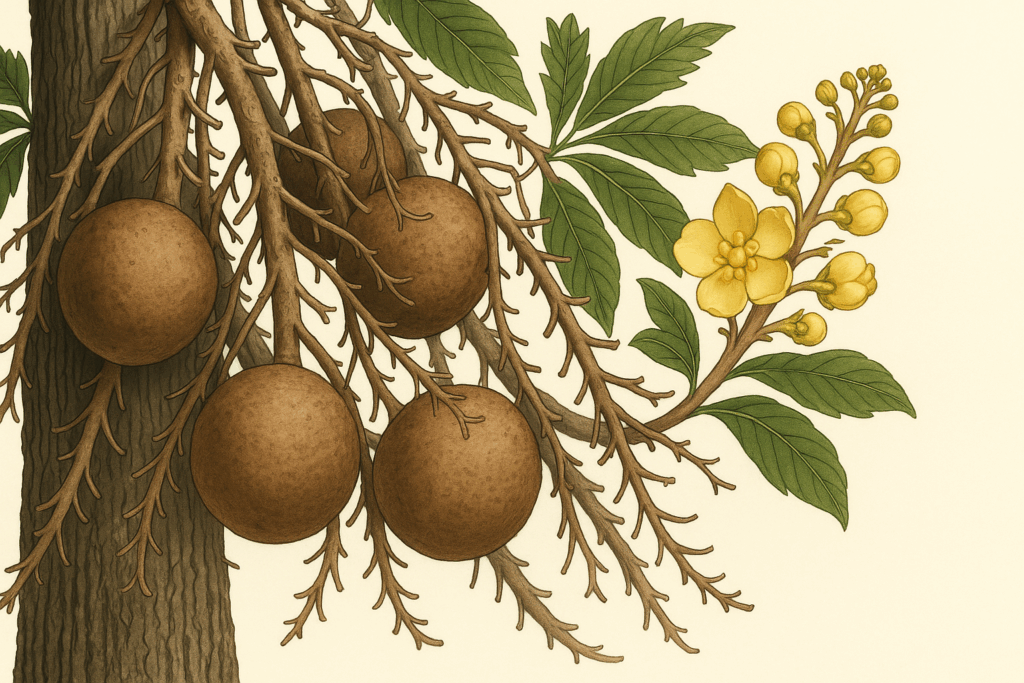
Sanskrit Name:Sal Vriksh
Devanagari Name:सल वृक्ष
English Name: Sal Tree
Description:
Sal is regarded as the “House of Tribal Goddess” and is esteemed as a sacred tree. It holds religious, medicinal, and commercial importance, with its wood being utilized in the furniture sector.
Sal is commonly employed to alleviate diarrhea and dysentery due to its astringent qualities. Additionally, it helps reduce swelling and control bleeding because of its analgesic and astringent effects.
In Ayurveda, combining Sal tree powder with honey is beneficial for addressing female health issues such as metrorrhagia (irregular bleeding) and leucorrhea (vaginal discharge) due to its cooling (Sita) and astringent (Kashaya) properties. It also aids in alleviating joint pain and arthritis by minimizing discomfort and inflammation through its analgesic and anti-inflammatory characteristics.
The resin from the Sal tree promotes healing of wounds and addresses skin concerns like excessive oiliness, itching, and rashes due to its astringent and antimicrobial properties. Applying a paste of Sal leaves with honey on the skin can help diminish marks and scars. For wound treatment, a mixture of Sal resin powder and honey can expedite healing.
Some individuals may experience sensitivity to Sal tree resin, leading to rashes. Therefore, it is recommended to use it with a carrier oil, such as coconut or sesame oil.
Benefits:
- The Sal tree is known for its antimicrobial, anti-inflammatory, and pain-relieving properties.
- It is used to treat respiratory issues, joint pain, and inflammation.
- The tree’s bark and leaves are used for healing wounds, improving skin health, and treating digestive disorders like constipation and indigestion.
Medical Conditions(Relief):
- The Sal tree is commonly used in Ayurvedic medicine for its anti-inflammatory, antimicrobial, and analgesic properties.
- The bark, leaves, and fruits of the Sal tree are used for treating skin conditions like eczema, acne, and rashes.
- Sal is also used to support digestive health by relieving constipation and bloating.
- It has beneficial effects on respiratory health, particularly for treating cough, asthma, and bronchitis.
- Sal is also used to reduce fever, manage pain, and support wound healing.
Medical Conditions(Avoid):
- Sal tree products should be avoided by individuals with allergies to plants in the Dipterocarpaceae family.
- Pregnant and breastfeeding women should consult their healthcare provider before using any Sal-based remedies.

