
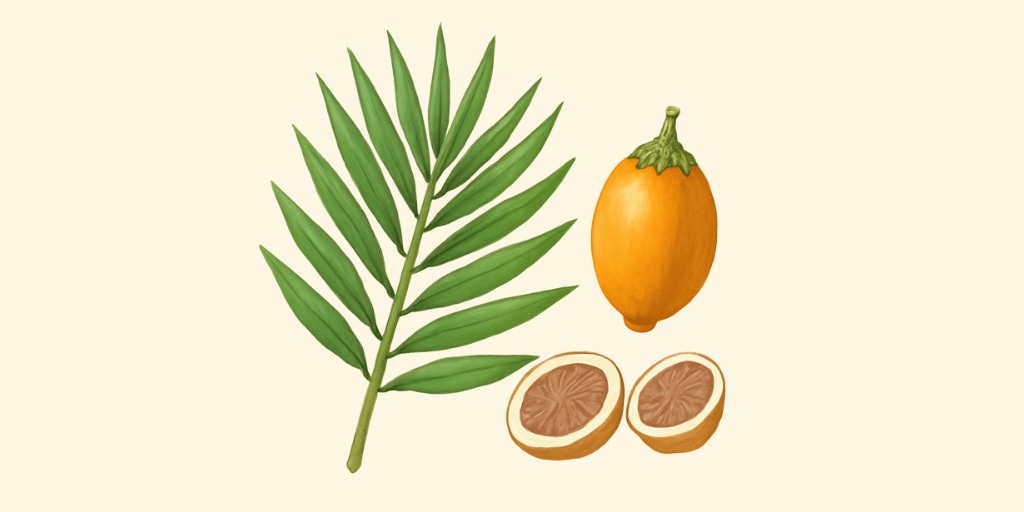
Sanskrit Name: Supari
Devanagari Name: सुपारी
English Name: Arecanut Palm, Betelnut Palm, Areca Palm, Pinang Palm
Description:
Supari, also known as Betel Nut (Areca catechu), is the seed of the Betel Palm, widely consumed in South and Southeast Asia. Supari is often chewed along with betel leaves and lime as a traditional practice in many cultures.
In Ayurvedic medicine, Supari is considered to have a stimulating, digestive, and antioxidant effect. It is commonly used for its mouth-freshening, stimulant, and tonic properties.
The nut is rich in alkaloids, particularly arecoline, which is responsible for its stimulating effects.
Benefits:
- Supari has several medicinal benefits, particularly related to oral health and digestive function.
- It is often used to promote digestion, reduce flatulence, and stimulate appetite.
- Supari is known for its antioxidant properties, which help in protecting the body against oxidative stress and free radical damage.
- It is also considered beneficial for oral health, helping to prevent bad breath, gum infections, and tooth decay when chewed in combination with betel leaves.
- Additionally, Supari has antimicrobial and anti-inflammatory properties, making it useful for treating skin issues, wounds, and infections.
- It is also believed to act as a mild stimulant, increasing alertness and providing a sense of energy and focus.
Medical Conditions(Relief):
- Supari is traditionally used to relieve several conditions.
- It helps promote digestive health by stimulating the production of digestive enzymes, reducing indigestion, flatulence, and bloating.
- Supari is also used to improve oral health by preventing tooth decay, bad breath, and gum disease.
- Its antioxidant and anti-inflammatory properties help in managing skin conditions such as acne, eczema, and inflammation.
- Supari is also beneficial for stimulation of appetite and may be used to treat anorexia or loss of appetite.
- In addition, its stimulant effect can aid in improving alertness and mental clarity.
- Supari is sometimes used in traditional medicine for its anti-parasitic properties and to treat intestinal worms.
Medical Conditions(Avoid):
- Supari should be used cautiously in certain conditions.
- Excessive use of Supari can have harmful effects due to its stimulating properties.
- Pregnant women should avoid chewing Supari, as it may lead to miscarriage due to its potential to stimulate the uterus.
- Supari can be addictive and is often consumed with tobacco and other substances, which may pose serious health risks, including oral cancer and gum disease.
- Long-term use of Supari may also lead to oral leukoplakia (white patches in the mouth), a precursor to oral cancer.
- People with high blood pressure, heart disease, or stomach ulcers should avoid excessive consumption, as it can exacerbate these conditions.
- Additionally, Supari should be avoided by individuals with allergies to the Areca palm family or those who are sensitive to its alkaloids, such as arecoline, which may cause adverse reactions like nausea or dizziness.

