
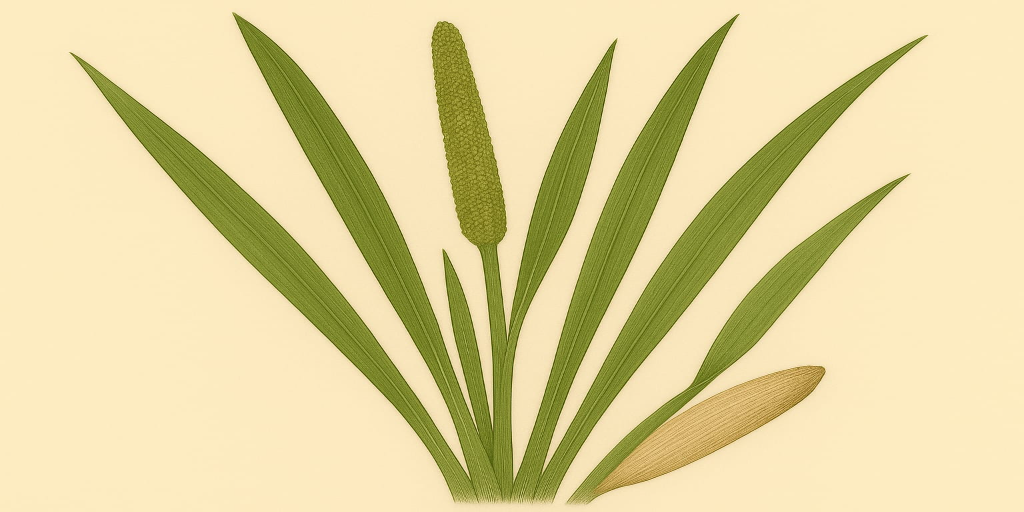
Sanskrit Name:Vacha
Devanagari Name:वाच
English Name: Sweet Flag
Description:
Vacha, also known as Acorus calamus, is a tall, grass-like, semi-aquatic perennial plant with sword-shaped leaves and a thick, creeping rhizome that grows horizontally beneath marshy soils. It is found in wetland regions of Kashmir, Manipur, Bengal, and the Western Ghats. The rhizome has a strong, camphoraceous aroma and bitter-pungent taste.
In Ayurveda, Vacha is considered a powerful medhya (nervine tonic), vatahara (Vata-pacifying), and kaphahara (Kapha-reducing) herb. It is traditionally used to improve speech and cognitive function, especially in children with delayed speech.
It also alleviates anxiety, epilepsy, and excessive sleepiness. The dried rhizome is often powdered and administered in small doses to aid memory, detoxify the mind, and clear Ama (toxins) from the body.
Benefits:
- Vacha is widely used for its cognitive-enhancing properties, especially in improving memory, mental clarity, and focus.
- It is often used to relieve stress, anxiety, and nervous disorders due to its calming effects on the nervous system.
- Vacha also has anti-inflammatory, antimicrobial, and antioxidant properties that help improve digestion, relieve bloating, and support overall gut health.
- It is used to treat respiratory conditions, alleviate symptoms of cough, and reduce sinus congestion.
- Additionally, it supports brain health and improves concentration.
Medical Conditions(Relief):
- Vacha is known for its cognitive-enhancing and neuroprotective properties.
- It is used to improve memory, concentration, and cognitive function, particularly in individuals suffering from mental fatigue or age-related cognitive decline.
- Vacha has anti-inflammatory and analgesic properties, which make it useful in treating conditions like arthritis and muscle pain.
- It is also used to treat digestive issues like bloating and indigestion and has a calming effect on the nervous system, reducing anxiety and stress.
Medical Conditions(Avoid):
- Vacha should be avoided by pregnant women due to its potential uterine-stimulating effects.
- It is also contraindicated for individuals with a history of liver or kidney disease, as it may cause toxicity in high doses.
- People with allergies to Acorus plants should avoid using Vacha.

