
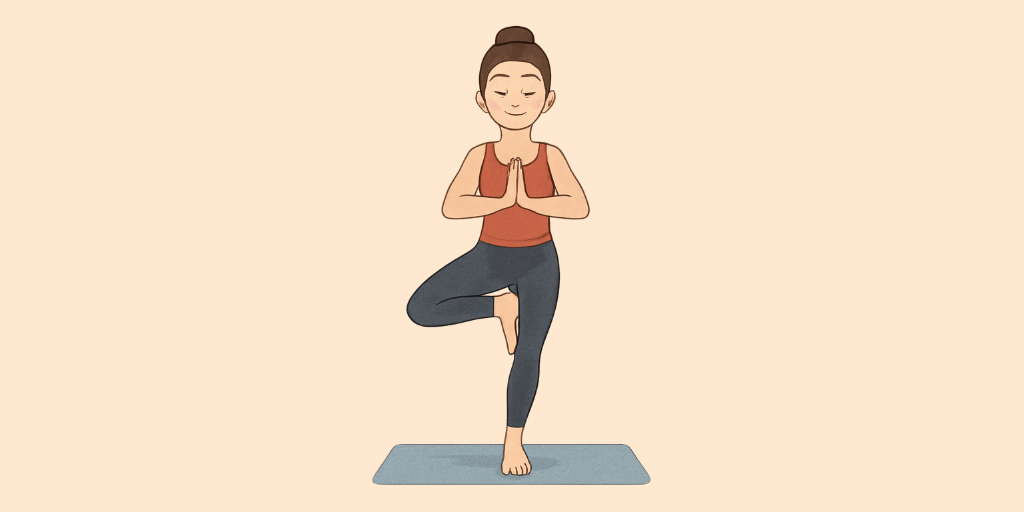
Sanskrit Name: वृक्षासन
English Name: Tree Pose
Description
The term “vrikshasana” originates from two Sanskrit words: “vriksha,” which translates to tree, and “asana,” meaning posture. This “tree pose” is deeply rooted in ancient mythology, with mentions in the Ramayana. In this epic, Lord Ravana is described as having practiced vrikshasana as a form of penance to earn a blessing from Lord Shiva.
Since that time, this posture has been viewed as powerful. As a balancing pose, vrikshasana enhances both physical and emotional stability. Similar to a tree’s steadfastness, the pose encourages focus and balance, preventing distractions for the body and mind. Practicing this asana cultivates inner stability, promoting calmness and harmony within oneself.
How to Do
Here are the steps to do Vrikshasana (Tree Pose).
- Start in Mountain Pose (Tadasana): Stand tall with your feet together and arms by your sides. Focus on grounding through your feet and find a point to focus on (drishti) to help with balance.
- Shift Your Weight to One Leg: Slowly shift your weight onto your right leg. Keep your right leg straight, with your knee aligned over your ankle.
- Place the Left Foot on the Right Leg: Bend your left knee and bring your left foot to the inner thigh or calf of your right leg (avoid the knee). Press your left foot into your right leg and your right leg into your left foot to create stability.
- Bring Your Hands Together in Front of Your Chest (Anjali Mudra): Inhale and bring your palms together in front of your chest in prayer position. This is your starting point.
- Extend Your Arms Overhead: Inhale, and as you balance on your right leg, raise both arms overhead, with your palms facing each other. Keep your arms straight and your shoulders relaxed.
- Engage Your Core: Keep your core engaged to maintain balance. Imagine reaching the crown of your head toward the sky, elongating your spine.
- Hold the Pose: Hold the position for 15–30 seconds, breathing deeply and steadily. Focus on a point in front of you to help with balance.
- Lower Your Arms and Foot: To release, slowly lower your arms and bring your left foot back down to the floor. Return to Tadasana (Mountain Pose).
- Repeat on the Other Side: Shift your weight to your left leg and repeat the same steps with the left leg supporting your body.
If you’re new to balancing poses, you can practice with the support of a wall or a chair nearby.
Benefits
- Practicing Vrikshasana enhances proprioception and coordination, which can help in daily activities and prevent falls.
- This asana engages the muscles of the legs, particularly the calves, thighs, and core, building strength and endurance.
- The focus required to maintain balance in this pose promotes mental clarity and concentration, which can be beneficial for stress management.
- Vrikshasana stretches the spine and opens the hips, improving flexibility and posture.
- The meditative aspect of holding this pose helps in calming the mind, reducing anxiety, and promoting a sense of tranquility.
- Successfully holding the pose can enhance self-esteem and confidence, contributing to overall mental well-being.
Medical Conditions(Relief)
- Anxiety and Stress: This pose promotes mental calmness and helps alleviate stress by encouraging focus and grounding.
- Balance Disorders: Practicing Vrikshasana enhances physical stability and coordination, making it helpful for those with balance-related issues.
- Posture Problems: It strengthens the legs and core, which can lead to improved posture and alignment over time.
- Digestive Issues: The pose aids in digestion by stimulating abdominal organs and promoting better blood circulation.
- Respiratory Conditions: By encouraging deep breathing, Vrikshasana can improve lung capacity and respiratory function.
Medical Conditions(Avoid)
- Knee Injuries: Individuals with knee pain or injuries may find this pose aggravating, as it places stress on the knee joint.
- Ankle Issues: Those with ankle sprains or instability should avoid this pose due to the balance required.
- Hip Problems: Hip pain or conditions like bursitis can be exacerbated by the alignment and pressure in this pose.
- Back Pain: Chronic back pain or conditions like sciatica can be worsened by the balancing and bending involved in Vrikshasana.
- Recent Surgeries: Anyone recovering from surgeries, especially in the lower body, should refrain from this pose until fully healed.
- Balance Disorders: Individuals with vertigo or balance issues may find it difficult to maintain stability in this pose.
References
- Patanjali, Yoga Sutras of Patanjali, Commentary by Swami Sivananda. Divine Life Society, 1990; p. 58.
- Swatmarama, Hatha Yoga Pradipika, Edited by Swami Muktibodhananda. Bihar School of Yoga, 1998; p. 72.
- Sushruta, Sushruta Samhita, Commentary by Acharya Y.T. (5th ed.). Varanasi: Chaukambha Orientalia, 1992; p. 445.
- Krishnamacharya, Yoga Makaranda, Translated by A.G. Mohan. Krishnamacharya Yoga Mandiram, 2012; p. 103.
- Iyengar B.K.S., Light on Yoga. HarperCollins Publishers, 1966; p. 102.
- Desikachar T.K.V., The Heart of Yoga: Developing a Personal Practice. Inner Traditions, 1995; p. 88.
- Jois K. Pattabhi, Yoga Mala. The Yoga Institute, 2002; p. 120.
- Swami Vivekananda, Raja Yoga. Advaita Ashrama, 1993; p. 61.
- Swami Sivananda, The Science of Pranayama. Divine Life Society, 1951; p. 99.
- Sivananda Yoga Vedanta Centres, Yoga and Health. Sivananda Publications, 2005; p. 45.

