
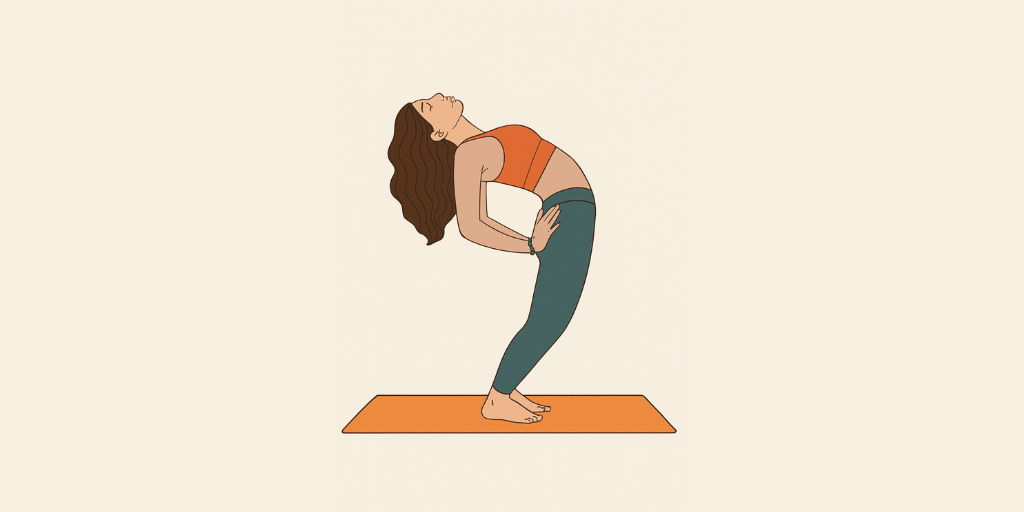
Sanskrit Name: अर्ध चक्रासन
English Name: Half Wheel Pose
Description
Ardha Chakrasana, known as “Half Wheel Pose” in English, derives its name from the Sanskrit words “Ardha” (अर्ध) meaning Half, “Chakra” (चक्र) meaning Wheel, and “Asana” (आसन) meaning Pose or Posture. This contemporary yoga position originates from the traditional Chakrasana (Wheel Pose) and is often utilized as a preparatory step before attempting the complete backbend of Chakrasana. It is referenced in various yoga texts and is a staple in Hatha Yoga practices.
Commonly incorporated into variations of Surya Namaskar (Sun Salutation), this pose is favored for enhancing spinal flexibility and strength. The backbend reflects themes of openness, energy flow, and expansion, resonating with traditional yogic ideals of balance and harmony within the body.
Visualize your body as a bridge connecting the earth and the sky; Ardha Chakrasana serves as a gentle invitation for energy, stretching the back, and allowing fresh air into your lungs. This accessible yet impactful yoga pose revitalizes the spine and fortifies the core.
How to Do
Here are the steps to do Ardha Chakrasana (Half Wheel Pose).
- Stand with Your Feet Apart: Start by standing tall with your feet about hip-width apart. Keep your arms by your sides, and your body aligned in a straight line. Engage your thighs and lift your kneecaps slightly.
- Place Your Hands on Your Lower Back: Place your palms on your lower back with your fingers pointing downward, just above your hips. Your elbows should be pointing backward, not out to the sides.
- Inhale and Lift Your Chest: Inhale deeply and press your feet firmly into the ground. Begin to gently lift your chest towards the sky, while arching your back. Keep your head neutral and look straight ahead at first.
- Push Your Hips Forward: While lifting your chest, push your hips slightly forward, ensuring that your spine remains elongated. Focus on lengthening your spine while opening up your chest.
- Lean Back Slightly: Exhale and gently lean your upper back, arching deeper into the pose. As you lean back, try to bring your arms closer to the back of your head. Keep your core engaged to protect your lower back.
- Hold the Pose: Stay in the pose for 15–30 seconds, breathing deeply and evenly. Focus on keeping the chest open and avoiding any tension in your neck.
- Release the Pose: To release, inhale and slowly lift your torso back to the neutral standing position. Bring your hands back to your sides and stand tall for a moment to counter the stretch.
Ardha Chakrasana is a gentle backbend that helps open the chest and strengthen the spine.
Benefits
- Ardha Chakrasana, or Half Wheel Pose, offers several therapeutic benefits.
- It helps to improve spinal flexibility and posture, strengthens the back muscles, and stimulates the digestive organs, promoting better digestion.
- Additionally, this asana can lowers stress and anxiety by opening the chest and heart area, allowing for deeper breathing.
- It also enhances lung capacity and can relieve tension in the shoulders and neck, making it beneficial for those who spend long hours sitting.
- Overall, practicing Ardha Chakrasana can contribute to physical and mental well-being, fostering a sense of balance and calm.
Medical Conditions(Relief)
- Alleviating back pain: It may aid in alleviating back pain by promoting spinal flexibility and strength.
- Indigestion: This asana can also improve digestion, as it massages the abdominal organs and encourages better blood flow.
- Stress and Anxiety disorders: Additionally, it may help in reducing stress and anxiety by opening up the chest and facilitating deeper breathing, which can enhance overall mental well-being.
- Respiratory Issues: Those with respiratory issues might find it beneficial, as it expands the lungs and improves respiratory function.
Medical Conditions(Avoid)
- Back Injuries: Individuals with acute or chronic back pain, herniated discs, or other spinal injuries should refrain from this pose to prevent exacerbation of their condition.
- Pregnancy: Pregnant women should avoid this asana, especially in the later stages, as it can place undue stress on the abdomen and lower back.
- Recent Surgeries: Those who have undergone recent abdominal or back surgeries should avoid this pose until fully healed and cleared by a healthcare provider.
- Severe Headaches or Migraines: Practicing this asana during a headache or migraine can increase discomfort and is not advisable.
- High Blood Pressure: Individuals with uncontrolled high blood pressure should avoid this pose, as it may elevate blood pressure further.
- Heart Conditions: Those with serious heart issues should consult a physician before attempting this pose, as it may put strain on the heart.
- Carpal Tunnel Syndrome: This condition can be aggravated by the weight-bearing aspect of the pose, so individuals should avoid it.
References
- Patanjali, Yoga Sutras of Patanjali, Commentary by Swami Sivananda. Divine Life Society, 1990; p. 58.
- Swatmarama, Hatha Yoga Pradipika, Edited by Swami Muktibodhananda. Bihar School of Yoga, 1998; p. 72.
- Sushruta, Sushruta Samhita, Commentary by Acharya Y.T. (5th ed.). Varanasi: Chaukambha Orientalia, 1992; p. 445.
- Krishnamacharya, Yoga Makaranda, Translated by A.G. Mohan. Krishnamacharya Yoga Mandiram, 2012; p. 103.
- Iyengar B.K.S., Light on Yoga. HarperCollins Publishers, 1966; p. 102.
- Desikachar T.K.V., The Heart of Yoga: Developing a Personal Practice. Inner Traditions, 1995; p. 88.
- Jois K. Pattabhi, Yoga Mala. The Yoga Institute, 2002; p. 120.
- Swami Vivekananda, Raja Yoga. Advaita Ashrama, 1993; p. 61.
- Swami Sivananda, The Science of Pranayama. Divine Life Society, 1951; p. 99.
- Sivananda Yoga Vedanta Centres, Yoga and Health. Sivananda Publications, 2005; p. 45.

