
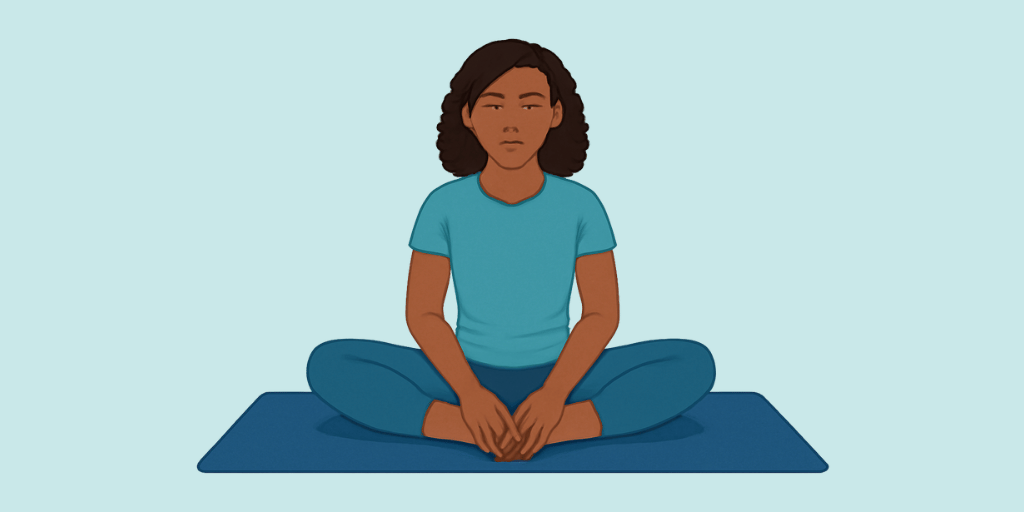
Sanskrit Name: भद्रासन
English Name: Gracious Pose
Description
Bhadrasana, known as the “Gracious Pose” or “Auspicious Pose,” represents tranquility, stability, and inner peace. The term Bhadra (भद्र) signifies graciousness and auspiciousness, while Asana (आसन) refers to pose or posture. This ancient yoga posture is highlighted in classical texts such as the Hatha Yoga Pradipika and the Gheranda Samhita, where it is regarded as a vital meditative position.
Traditionally, sages and yogis employed this pose for extended meditation due to its capacity to enhance stillness and concentration. While it resembles Butterfly Pose (Baddha Konasana), Bhadrasana has the feet positioned slightly farther from the groin. It is commonly practiced across various styles of Hatha Yoga, Kundalini Yoga, and Buddhist meditation.
Additionally, Bhadrasana is thought to facilitate the upward flow of prana (life force energy), promoting spiritual awakening and aiding in the balance of the Muladhara (Root Chakra), which relates to grounding and stability.
How to Do
Here are the steps to do Bhadrasana (Gracious Pose).
- Sit on the Floor: Begin by sitting on the floor with your legs extended in front of you.
- Bend Your Knees: Bend your knees and bring your feet toward your pelvis. Keep the soles of your feet pressed together, with your heels as close to your pelvis as is comfortable.
- Press Your Feet Together: Press the soles of your feet together gently. Try to align your feet so that they are in line with your knees, or bring them closer if possible.
- Hold Your Feet with Your Hands: Grasp your feet with both hands, keeping your fingers wrapped around your toes. You can keep your elbows close to your body or gently press them towards the floor for a deeper stretch.
- Lengthen Your Spine: Inhale and lift your spine up, elongating the neck and chest. Ensure your back is straight, and your shoulders are relaxed.
- Open Your Hips and Knees: Exhale and gently press your knees down toward the floor, opening your hips. This may create a mild stretch in the inner thighs. Keep your chest lifted and your gaze forward.
- Hold the Pose: Stay in the pose for 30 seconds to 1 minute, breathing deeply. Keep your spine elongated and focus on releasing any tension in the hips and groin.
- Release the Pose: To release, gently bring your knees together and extend your legs forward. Rest in Savasana (Corpse Pose) or any comfortable seated position.
If you experience discomfort in the knees, use cushions or blocks under your thighs for support.
Benefits
- This pose promotes relaxation and helps calm the mind, making it effective for managing anxiety and stress levels.
- Bhadrasana stretches and opens the hips, which can alleviate discomfort associated with tight hip muscles.
- By encouraging proper posture and alignment, this asana aids in digestion and can help relieve bloating and discomfort.
- The gentle opening of the hips and pelvis can provide relief from menstrual cramps and improve circulation in the lower abdomen.
- Regular practice can help reduce tension in the lower back and improve mobility, offering relief to those suffering from sciatica.
- Bhadrasana encourages better spinal alignment, which can be beneficial for individuals with poor posture.
- Practicing this pose can enhance focus and mental clarity, making it useful for those experiencing mental fatigue.
Medical Conditions(Relief)
- Improves Flexibility: This asana helps to stretch and open the hips, groin, and thighs, enhancing overall flexibility in these areas.
- Strengthens Pelvic Muscles: Regular practice can strengthen the pelvic floor muscles, which is beneficial for reproductive health and stability.
- Promotes Circulation: Sitting in this pose encourages blood flow to the lower body, which can help alleviate discomfort from sedentary lifestyles.
- Reduces Stress and Anxiety: The grounding nature of Bhadrasana can promote relaxation, reducing stress and anxiety levels.
- Enhances Digestion: The posture aids in stimulating the digestive organs, potentially improving digestion and alleviating constipation.
- Balances Energy: This asana is believed to balance the root chakra, promoting a sense of grounding and stability.
- Supports Meditation: Bhadrasana is often used as a meditative posture, helping practitioners to maintain focus and calm the mind during meditation.
Medical Conditions(Avoid)
- Knee Injuries: Individuals with knee injuries or chronic knee pain should avoid this pose as it may exacerbate discomfort.
- Hip Issues: Those with hip problems, such as arthritis or recent surgeries, may find this pose challenging and should refrain from practicing it.
- Ankle Problems: If there are any issues with the ankles, such as sprains or fractures, Bhadrasana could cause further strain.
- Lower Back Pain: People suffering from severe lower back pain should avoid this pose, as it may put additional pressure on the spine.
- Pregnancy: Pregnant individuals, especially in later trimesters, should avoid this pose unless guided by a qualified instructor.
References
- Patanjali, Yoga Sutras of Patanjali, Commentary by Swami Sivananda. Divine Life Society, 1990; p. 58.
- Swatmarama, Hatha Yoga Pradipika, Edited by Swami Muktibodhananda. Bihar School of Yoga, 1998; p. 72.
- Sushruta, Sushruta Samhita, Commentary by Acharya Y.T. (5th ed.). Varanasi: Chaukambha Orientalia, 1992; p. 445.
- Krishnamacharya, Yoga Makaranda, Translated by A.G. Mohan. Krishnamacharya Yoga Mandiram, 2012; p. 103.
- Iyengar B.K.S., Light on Yoga. HarperCollins Publishers, 1966; p. 102.
- Desikachar T.K.V., The Heart of Yoga: Developing a Personal Practice. Inner Traditions, 1995; p. 88.
- Jois K. Pattabhi, Yoga Mala. The Yoga Institute, 2002; p. 120.
- Swami Vivekananda, Raja Yoga. Advaita Ashrama, 1993; p. 61.
- Swami Sivananda, The Science of Pranayama. Divine Life Society, 1951; p. 99.
- Sivananda Yoga Vedanta Centres, Yoga and Health. Sivananda Publications, 2005; p. 45.

