
Sanskrit Name: अष्टांग योग
English Name: Eight-Limbed Path of Yoga
Description
Ashtang Yoga is a well-established approach to cultivating self-discipline, mindfulness, and spiritual enlightenment. The name derives from Sanskrit, where “Ashta” (अष्ट) signifies “eight,” and “Anga” (अंग) means “limbs,” referring to the eightfold path detailed by Maharishi Patanjali in the Yoga Sutras. This organized framework offers a sequential method for attaining physical, mental, and spiritual health.
The eight limbs of Ashtanga Yoga consist of Yama (ethical principles), Niyama (self-regulation), Asana (body postures), Pranayama (breath management), Pratyahara (sense withdrawal), Dharana (focus), Dhyana (meditative practice), and Samadhi (ultimate realization). It acts as a comprehensive guide for living a balanced and meaningful life, integrating the body, breath, and mind.
The structure of Ashtanga Yoga was formalized by Maharishi Patanjali in his ancient work, the Yoga Sutras (around 200 BCE). The principles of Ashtanga Yoga were subsequently preserved and elaborated upon through Hatha Yoga and contemporary yoga forms. Today, it is recognized as one of the most genuine and impactful systems for holistic development, embraced by both spiritual seekers and wellness advocates.
How to Do
Here are the steps to do Ashtanga Yoga, which is a dynamic and structured style of yoga that follows a set sequence of postures. It’s often practiced in a Vinyasa style, where each movement is synchronised with the breath.
Ashtanga Yoga follows the following key steps.
- Start with Pranayama (Breathing Exercises)
- Ujjayi Pranayama (Victorious Breath): Begin by sitting comfortably in a cross-legged position (Sukhasana or Padmasana). Close your eyes, focus on your breath, and start to inhale and exhale deeply through the nose, creating a slight constriction at the back of the throat. This creates a soft sound with each breath.
- Focus: Bring your attention to the sound of your breath to calm the mind.
- Set an Intention (Sankalpa)
- Before starting the practice, set a positive intention for your session. It could be something simple, such as focusing on your breath, being present, or working on a specific area of your practice.
- Sun Salutations (Surya Namaskar)
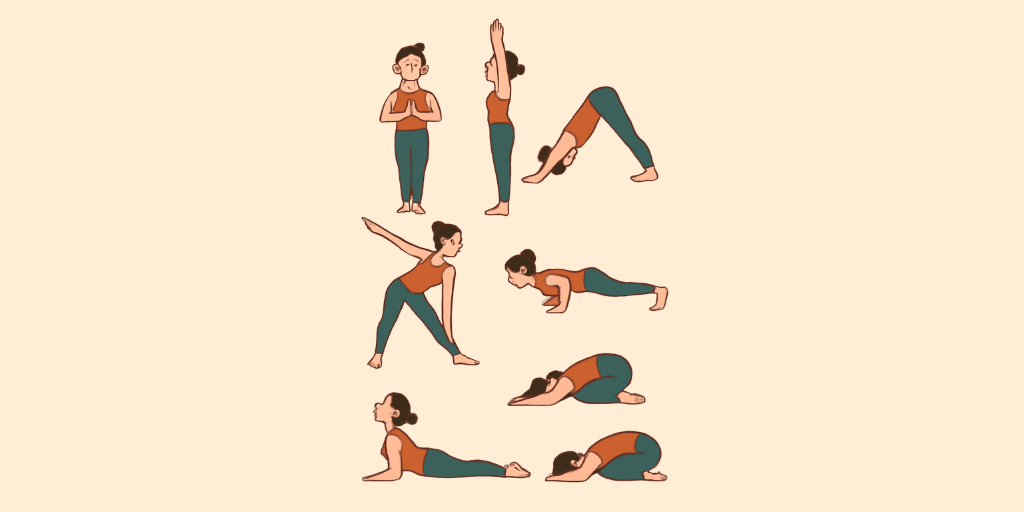
- Ashtanga yoga begins with a series of Sun Salutations (Surya Namaskar) to warm up the body.
Steps for Surya Namaskar A:
- Tadasana (Mountain Pose): Stand tall with your feet together, palms together in front of your chest (Pranamasana).
- Inhale, Urdhva Hastasana (Raised Arms Pose): Stretch your arms overhead, arch your back slightly.
- Exhale, Uttanasana (Forward Fold): Fold forward and bring your hands to the floor.
- Inhale, Ardha Uttanasana (Half Forward Fold): Lengthen your spine and look forward.
- Exhale, Chaturanga Dandasana (Four-Limbed Staff Pose): Step back into plank position, lower down halfway.
- Inhale, Urdhva Mukha Svanasana (Upward-Facing Dog): Press into your hands and lift your chest, straighten your arms.
- Exhale, Adho Mukha Svanasana (Downward-Facing Dog): Lift your hips, forming an inverted V shape.
- Inhale, Step Forward: Step or jump forward into Ardha Uttanasana.
- Exhale, Uttanasana (Forward Fold): Fold forward.
- Inhale, Urdhva Hastasana (Raised Arms Pose): Reach up with a slight arch.
- Exhale, Tadasana: Stand back up.
Repeat Surya Namaskar B with variations in the sequence, including chair pose (Utkatasana) and warrior poses (Virabhadrasana).
- Standing Poses (Ashtanga Primary Series)
- After Surya Namaskar, practice the standing poses in Ashtanga. These include poses like:
- Trikonasana (Triangle Pose)
- Parsvakonasana (Side Angle Pose)
- Prasarita Padottanasana (Wide-Legged Forward Bend)
- Utthita Hasta Padangusthasana (Extended Hand-to-Big-Toe Pose)
- Ardha Baddha Padmottanasana (Half Bound Lotus Forward Bend)
- Seated Poses (Ashtanga Primary Series)
- After the standing sequence, move to seated postures:
- Paschimottanasana (Seated Forward Bend)
- Purvottanasana (Upward Plank Pose)
- Janu Sirsasana (Head-to-Knee Forward Bend)
- Marichyasana (Pose Dedicated to the Sage Marichi)
- Finishing Sequence
- End the practice with a series of restorative poses to cool down:
- Setu Bandhasana (Bridge Pose)
- Savasana (Corpse Pose)
- Viparita Karani (Legs-Up-the-Wall Pose)
- Closing Mantra
- Once in Savasana, take a moment to reflect on your practice, and finish with a closing mantra:
- “Om Shanti Shanti Shanti” (Peace, Peace, Peace).
Ashtanga yoga follows a structured sequence, so practice each day or regularly to build strength, flexibility, and focus.
Benefits
- Regular practice of Ashtanga yoga enhances flexibility by gradually stretching muscles and connective tissues, reducing the risk of injury and improving overall mobility.
- The dynamic nature of Ashtanga, with its focus on strength-based postures, helps build muscle strength, particularly in the core, arms, and legs, which supports better posture and balance.
- Ashtanga incorporates pranayama (breath control) with asana practice, which can improve lung capacity and respiratory efficiency, promoting better oxygenation of the body.
- The meditative aspect of Ashtanga yoga, combined with physical movement, helps reduce stress levels by calming the mind and enhancing emotional resilience.
- The practice of Ashtanga requires mental focus to synchronize breath with movement, which can improve concentration and mental clarity over time.
- The vigorous nature of Ashtanga yoga promotes sweating, which helps to eliminate toxins from the body, contributing to overall health and vitality.
- The flowing sequences in Ashtanga improve blood circulation, ensuring that nutrients are effectively delivered to cells and waste products are removed efficiently.
- Regular practice can help in managing anxiety and depression, fostering a sense of emotional stability and well-being.
- Ashtanga yoga emphasizes alignment and body awareness, which can lead to better posture and alleviation of related discomforts.
- The integration of physical, mental, and spiritual practices in Ashtanga yoga promotes overall well-being, encouraging a balanced lifestyle.
Medical Conditions(Relief)
- Stress and Anxiety: The practice promotes relaxation through controlled breathing and meditation, which can help reduce stress levels and alleviate anxiety symptoms.
- Chronic Pain: Regular practice may improve flexibility and strength, potentially easing discomfort from conditions like arthritis or lower back pain.
- Respiratory Issues: The emphasis on breath control can enhance lung capacity and improve overall respiratory function, aiding those with asthma or other breathing difficulties.
- Cardiovascular Health: The dynamic sequences of Ashtanga yoga can improve circulation and heart health, potentially lowering blood pressure and reducing the risk of heart disease.
- Digestive Disorders: Certain poses can stimulate the digestive system, helping to alleviate issues like constipation and bloating.
- Mental Clarity and Focus: The meditative aspects of the practice can enhance concentration and mental clarity, benefiting those with attention-related challenges.
- Musculoskeletal Problems: The physical postures can strengthen muscles and improve alignment, providing relief from conditions like scoliosis or general muscle tension.
- Sleep Disorders: The calming nature of the practice can promote better sleep quality, helping those who struggle with insomnia or disrupted sleep patterns.
Medical Conditions(Avoid)
- Pregnancy: Many asanas can put undue stress on the abdomen and may not be safe during pregnancy.
- Severe Back Pain: Individuals with chronic back issues should avoid asanas that strain the lower back, particularly those involving deep forward bends or twists.
- Recent Surgery: Post-operative individuals should refrain from asanas until cleared by a healthcare professional, as movements may hinder healing.
- Joint Issues: Conditions like arthritis or severe joint pain can be exacerbated by weight-bearing poses or deep stretches.
- Heart Conditions: Those with cardiovascular issues should avoid strenuous asanas that elevate heart rate significantly without medical supervision.
- High Blood Pressure: Inversions and poses that require significant exertion may not be suitable for individuals with hypertension.
- Epilepsy: Certain asanas may trigger seizures, so individuals with epilepsy should consult a doctor before practicing.
- Hernias: Straining poses can worsen hernias, so caution or avoidance is necessary.
References
- Patanjali, Yoga Sutras of Patanjali, Commentary by Swami Sivananda. Divine Life Society, 1990; p. 58.
- Swatmarama, Hatha Yoga Pradipika, Edited by Swami Muktibodhananda. Bihar School of Yoga, 1998; p. 72.
- Sushruta, Sushruta Samhita, Commentary by Acharya Y.T. (5th ed.). Varanasi: Chaukambha Orientalia, 1992; p. 445.
- Krishnamacharya, Yoga Makaranda, Translated by A.G. Mohan. Krishnamacharya Yoga Mandiram, 2012; p. 103.
- Iyengar B.K.S., Light on Yoga. HarperCollins Publishers, 1966; p. 102.
- Desikachar T.K.V., The Heart of Yoga: Developing a Personal Practice. Inner Traditions, 1995; p. 88.
- Jois K. Pattabhi, Yoga Mala. The Yoga Institute, 2002; p. 120.
- Swami Vivekananda, Raja Yoga. Advaita Ashrama, 1993; p. 61.
- Swami Sivananda, The Science of Pranayama. Divine Life Society, 1951; p. 99.
- Sivananda Yoga Vedanta Centres, Yoga and Health. Sivananda Publications, 2005; p. 45.

