
Sanskrit Name: गर्भासन
English Name: Embryo Pose
Description
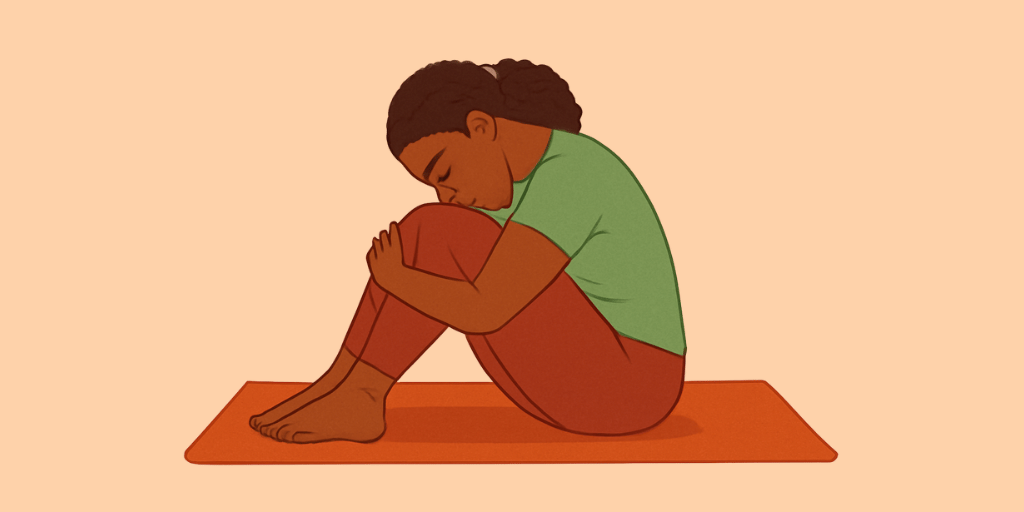
Garbhasana is a seated yoga position that represents a fetus in the womb. The term Garbhasana derives from two Sanskrit words: Garbha (गर्भ), which means “womb” or “embryo,” and Asana (आसन), meaning “pose” or “posture.” Thus, Garbhasana can be interpreted as “Womb Pose” or “Embryo Pose.”
While the precise origins of Garbhasana in yogic practices are not thoroughly documented, it is thought to be a traditional pose within Hatha Yoga, a discipline that has been practiced for over a millennium. Although ancient texts like the Hatha Yoga Pradipika and Gheranda Samhita outline Hatha Yoga and its postures, Garbhasana may not be explicitly referenced.
This pose is often regarded as a means to foster feelings of calmness, safety, and a return to a pure and tranquil state. It encourages inward focus, aiding practitioners in feeling grounded, centered, and connected to themselves.
How to Do
Here are the steps to do Garbhasana (Embryo Pose).
- Start in a Seated Position: Begin by sitting on the floor in Vajrasana (Thunderbolt Pose) or a comfortable seated position with your legs folded beneath you. Ensure your spine is straight and your shoulders are relaxed.
- Tuck Your Arms and Knees: Bring your knees together and place your arms inside the space between your thighs and calves. Cross your arms at your elbows, one over the other, and bring them towards your chest. The forearms should be gently resting against the inside of your knees.
- Hold Your Hands Together: Gently clasp your hands in front of your chest, bringing your palms together in a prayer position or interlacing your fingers. Keep your hands close to your chest.
- Bring Your Chin to Your Chest: Tuck your chin towards your chest, making sure your neck is relaxed and your spine remains straight. This will create the “embryo” shape, with your body curled inward.
- Focus on Your Breath: Inhale deeply and exhale slowly and steadily. Focus on creating a sense of calmness, relaxation, and inward concentration. Allow your body to feel grounded in the pose.
- Hold the Pose: Stay in the pose for 30 seconds to 1 minute, or as long as you are comfortable. Keep your focus on your breath, and deepen your connection to the present moment.
- Release the Pose: To release, gently uncross your arms, relax your hands, and bring your legs back to a neutral seated position. Sit quietly for a moment in Sukhasana or Padmasana to observe the benefits of the practice.
Garbhasana is a gentle, introspective yoga pose that encourages relaxation, flexibility, and mindfulness.
Benefits
- Garbhasana, or the Embryo Pose, is beneficial for various medical conditions.
- It aids in alleviating stress and anxiety, promoting relaxation and mental clarity.
- The pose can also enhance flexibility and strength in the back and hips, which is helpful for individuals with lower back pain.
- Additionally, it may assist in improving circulation, making it beneficial for those with circulation issues.
- Practicing Garbhasana can also support digestive health and relieve discomfort associated with digestive disorders.
Medical Conditions(Relief)
- Relaxation and Stress Relief: This pose promotes deep relaxation by calming the mind and reducing stress levels. It helps in alleviating anxiety and creating a sense of inner peace.
- Improved Flexibility: Garbhasana stretches the spine, hips, and thighs, enhancing overall flexibility. This is particularly beneficial for those with sedentary lifestyles.
- Enhanced Circulation: The pose encourages blood flow to the abdominal area, which can aid in digestion and improve overall circulation.
- Support for Pregnant Women: It can help alleviate discomfort during pregnancy by providing a gentle stretch and promoting relaxation, making it a suitable pose for expectant mothers.
- Mindfulness and Focus: Practicing Garbhasana fosters mindfulness, allowing individuals to connect with their inner selves and promote mental clarity and focus.
- Emotional Balance: The pose encourages emotional stability by allowing practitioners to turn inward and process their feelings, contributing to a balanced emotional state.
Medical Conditions(Avoid)
- Pregnancy Complications: Women with a history of miscarriage, preterm labor, or other pregnancy-related complications should avoid Garbhasana to prevent undue pressure on the abdomen.
- Hip or Knee Injuries: Individuals with severe hip or knee injuries may find this pose uncomfortable or exacerbating their condition.
- Back Problems: Those with chronic back pain or spinal issues should be cautious, as the position may strain the lower back.
- Digestive Disorders: Conditions like severe acid reflux or gastrointestinal issues might be aggravated by the compression involved in this pose.
- Recent Surgery: Anyone who has undergone recent abdominal or pelvic surgery should avoid this pose until fully healed and cleared by a healthcare provider.
References
- Patanjali, Yoga Sutras of Patanjali, Commentary by Swami Sivananda. Divine Life Society, 1990; p. 58.
- Swatmarama, Hatha Yoga Pradipika, Edited by Swami Muktibodhananda. Bihar School of Yoga, 1998; p. 72.
- Sushruta, Sushruta Samhita, Commentary by Acharya Y.T. (5th ed.). Varanasi: Chaukambha Orientalia, 1992; p. 445.
- Krishnamacharya, Yoga Makaranda, Translated by A.G. Mohan. Krishnamacharya Yoga Mandiram, 2012; p. 103.
- Iyengar B.K.S., Light on Yoga. HarperCollins Publishers, 1966; p. 102.
- Desikachar T.K.V., The Heart of Yoga: Developing a Personal Practice. Inner Traditions, 1995; p. 88.
- Jois K. Pattabhi, Yoga Mala. The Yoga Institute, 2002; p. 120.
- Swami Vivekananda, Raja Yoga. Advaita Ashrama, 1993; p. 61.
- Swami Sivananda, The Science of Pranayama. Divine Life Society, 1951; p. 99.
- Sivananda Yoga Vedanta Centres, Yoga and Health. Sivananda Publications, 2005; p. 45.

