
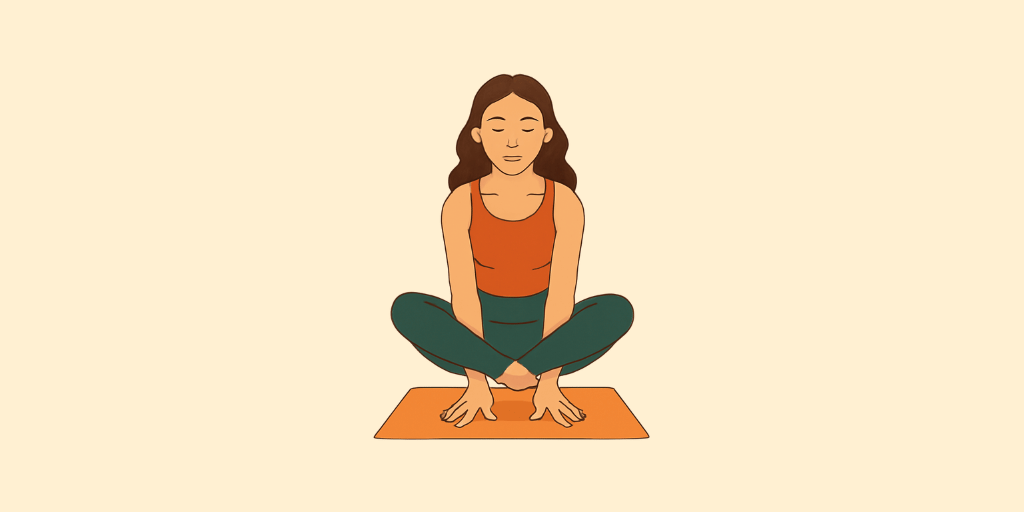
Sanskrit Name: कुक्कुटासन
English Name: Rooster Pose
Description
Kukkutasana is a challenging yoga pose that mimics the posture of a rooster. The term Kukkutasana is derived from two Sanskrit words: Kukkuta (कक्कुत), meaning “rooster,” and Asana (आसन), meaning “pose.” Thus, Kukkutasana translates to “Rooster Pose.” This pose is thought to have roots in ancient yogic practices, especially within Hatha Yoga.
While its exact origins are not well-documented, it is recognized as part of a series of postures aimed at enhancing strength, flexibility, and mental focus. Kukkutasana is classified as an advanced asana that necessitates significant body control and concentration, typically practiced after mastering foundational poses like the plank and various balance poses.
The rooster symbolizes alertness, strength, and vitality, making it an appropriate representation for this demanding posture.
How to Do
Here are the steps to do Kukkutasana (Rooster Pose).
- Sit in Padmasana (Lotus Pose): Start by sitting in Padmasana (Lotus Pose) with each foot resting on the opposite thigh. Ensure that your spine is straight and your hands are resting on your knees.
- Place Your Hands Under Your Knees: Place your palms under the thighs (on the sides of your knees) while keeping your arms bent. Your fingers should face inward, towards your torso, and your elbows should point outward.
- Lift Your Body: Inhale and, as you exhale, use the strength of your arms and core to lift your entire body off the floor, balancing only on your hands and the soles of your feet. Keep your feet locked in the lotus position and ensure your chest remains lifted.
- Engage Your Core: Engage your abdominal muscles to help maintain balance and support your torso. Keep your core strong and your back straight while holding the pose.
- Gaze Forward: Keep your head neutral, with your gaze forward or slightly downward. This will help you maintain focus and balance.
- Hold the Pose: Stay in Kukkutasana for 15-30 seconds, breathing deeply and steadily. Focus on maintaining your balance, lifting your chest, and keeping your body steady.
- Release the Pose: To come out of the pose, slowly lower your body back to the floor with control. Relax in a seated position or in Savasana (Corpse Pose) for a few moments to release any tension.
Kukkutasana is a challenging and rewarding pose that builds strength and balance, while also opening the hips and improving focus.
Benefits
- Kukkutasana, or the Rooster Pose, offers several therapeutic benefits.
- It enhances core strength, improves balance, and increases flexibility in the hips and legs.
- This asana also aids in digestion and stimulates the abdominal organs, which can help alleviate issues such as constipation.
- Additionally, Kukkutasana promotes mental focus and concentration, as it requires a degree of mindfulness and stability.
- Regular practice can also improve posture and relieve tension in the back, contributing to overall physical well-being.
Medical Conditions(Relief)
- Strengthens the Core: Engages and strengthens the abdominal muscles, improving overall core stability.
- Improves Balance: Challenges your balance and coordination, helping to develop better balance skills.
Medical Conditions(Avoid)
- Wrist Injuries: Individuals with wrist fractures or chronic pain should avoid this pose as it places significant weight on the wrists.
- Shoulder Injuries: Those with shoulder impingement or rotator cuff injuries may exacerbate their condition by performing this asana.
- Hernia: People with hernias should refrain from this pose, as it involves intense abdominal pressure.
- Pregnancy: Pregnant individuals should avoid Kukkutasana due to the pressure it places on the abdomen and the potential for imbalance.
- Knee Issues: Those with knee injuries or chronic knee pain may find this pose uncomfortable or harmful.
- Recent Surgery: Anyone who has undergone recent surgery, especially in the abdominal or pelvic area, should avoid this asana to prevent strain.
References
- Patanjali, Yoga Sutras of Patanjali, Commentary by Swami Sivananda. Divine Life Society, 1990; p. 58.
- Swatmarama, Hatha Yoga Pradipika, Edited by Swami Muktibodhananda. Bihar School of Yoga, 1998; p. 72.
- Sushruta, Sushruta Samhita, Commentary by Acharya Y.T. (5th ed.). Varanasi: Chaukambha Orientalia, 1992; p. 445.
- Krishnamacharya, Yoga Makaranda, Translated by A.G. Mohan. Krishnamacharya Yoga Mandiram, 2012; p. 103.
- Iyengar B.K.S., Light on Yoga. HarperCollins Publishers, 1966; p. 102.
- Desikachar T.K.V., The Heart of Yoga: Developing a Personal Practice. Inner Traditions, 1995; p. 88.
- Jois K. Pattabhi, Yoga Mala. The Yoga Institute, 2002; p. 120.
- Swami Vivekananda, Raja Yoga. Advaita Ashrama, 1993; p. 61.
- Swami Sivananda, The Science of Pranayama. Divine Life Society, 1951; p. 99.
- Sivananda Yoga Vedanta Centres, Yoga and Health. Sivananda Publications, 2005; p. 45.

