
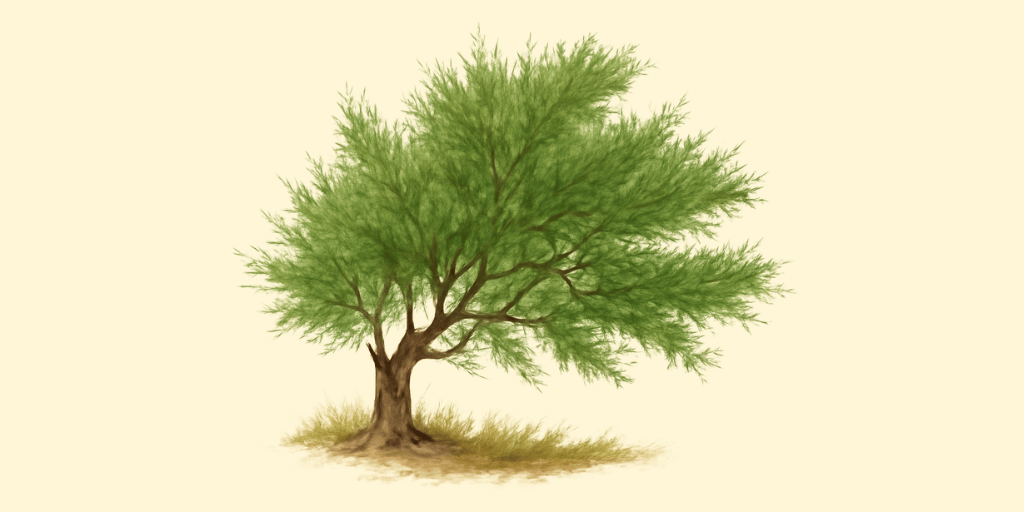
Sanskrit Name: Jhau
Devanagari Name: झाऊ
English Name: Casuarina
Description:
Jhau is a tall, evergreen tree found in the coastal regions of India, Sri Lanka, and parts of Southeast Asia. The tree has long, narrow leaves and produces yellowish flowers. It is commonly found in saltwater environments, growing along the coastline and in sandy soils.
Jhau has anti-inflammatory, analgesic, and antibacterial properties, making it useful in treating muscle pain, joint pain, and swelling. The tree’s leaves and bark are used for their antiseptic effects, particularly in treating skin infections, wounds, and abrasions.
Jhau also helps improve respiratory health, treating conditions like cough, bronchitis, and asthma by reducing inflammation and clearing mucus from the lungs. It balances Vata and Kapha doshas, improving circulation, promoting digestive health, and supporting overall well-being.
Benefits:
- Tamarisk (Tamarix gallica) offers several therapeutic benefits.
- It acts as a laxative, making it effective for treating constipation.
- Additionally, it has antihemolytic properties, which can be beneficial in managing bleeding disorders such as menorrhagia and rectal bleeding.
- The main therapeutic constituent is Tamarixin, which contributes to these effects.
- Tamarisk is also included in various formulations like Bonnisan, Geriforte, and Liv.52.
Medical Conditions(Relief):
- Jhau is used in Ayurveda to treat respiratory conditions, such as cough, asthma, and bronchitis.
- It has expectorant properties that help in clearing the airways and reducing mucus production.
- It is also known to support the digestive system, helping to relieve indigestion, bloating, and constipation.
- It has anti-inflammatory and antioxidant properties that support skin health, reduce inflammation in conditions like eczema, and improve wound healing.
Medical Conditions(Avoid):
- Jhau should be avoided by individuals with allergies to legumes or plants in the Mimosaceae family.
- Pregnant women should consult their healthcare provider before using Jhau, as its safety during pregnancy has not been established.

