Sanskrit Name: Punarnava
Devanagari Name: पुनर्नवा
English Name: Punarnava
Description:
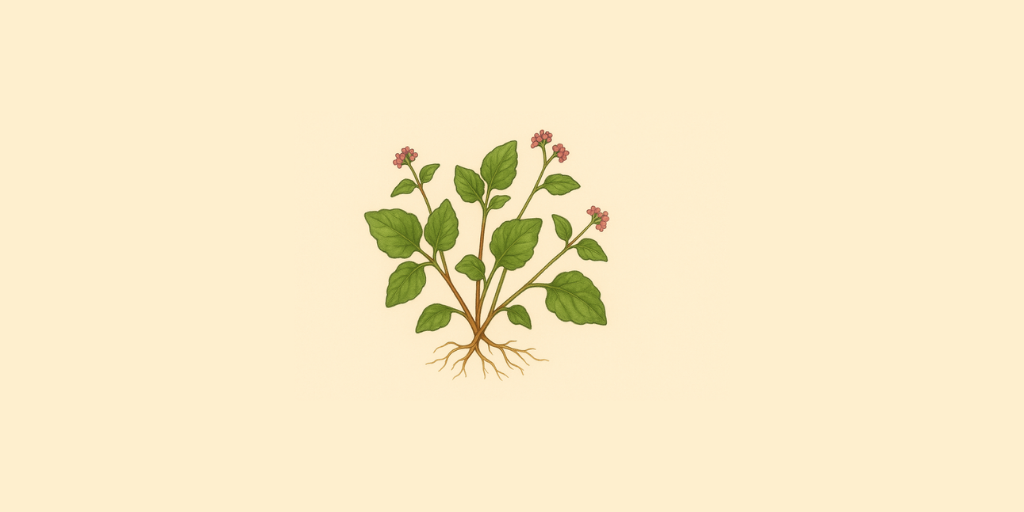
Punarnava is a perennial herb found in the tropical and subtropical regions of India, Sri Lanka, and parts of Southeast Asia. It is commonly found in damp, moist areas like riverbanks and wetlands, and features small, purple flowers and succulent, oblong leaves.
Punarnava is renowned for its diuretic, anti-inflammatory, antioxidant, and detoxifying properties. It is commonly used in Ayurveda for treating water retention, kidney disorders, and urinary tract infections (UTIs) by promoting urine flow and helping to eliminate toxins from the body.
The herb is also effective in managing digestive issues like gas, bloating, and constipation, as it stimulates digestive fire and aids in nutrient absorption. Punarnava is a raspanchak, supporting liver health and reducing inflammation.
Punarnava balances Vata and Kapha doshas, promoting respiratory health, skin health, and overall well-being. It is also used to reduce joint pain and arthritis due to its anti-inflammatory and analgesic properties.
Benefits:
- It is effective in treating urinary tract infections and is beneficial for patients with nephritic syndrome.
- Additionally, it aids in managing asthma and inflammatory conditions like rheumatism.
- The presence of the flavonoid arbinofuranoside helps lower serum uric acid, supporting the treatment of urogenital disorders.
- The plant also has notable antimicrobial properties, enhancing its therapeutic applications.
Medical Conditions(Relief):
- Punarnava is a potent herb used in Ayurveda for its rejuvenating and detoxifying properties.
- It is commonly used to treat kidney disorders, urinary tract infections (UTIs), and fluid retention.
- Punarnava also helps in reducing swelling and inflammation associated with conditions like arthritis.
- It supports liver health and improves digestion, alleviating symptoms like bloating and indigestion.
- Punarnava is also beneficial for balancing blood sugar levels, making it useful for managing diabetes.
Medical Conditions(Avoid):
- Punarnava should be avoided by individuals with kidney disease or kidney problems unless under medical supervision.
- Pregnant and breastfeeding women should consult their healthcare provider before using Punarnava, as it may have uterine-stimulating effects.

