
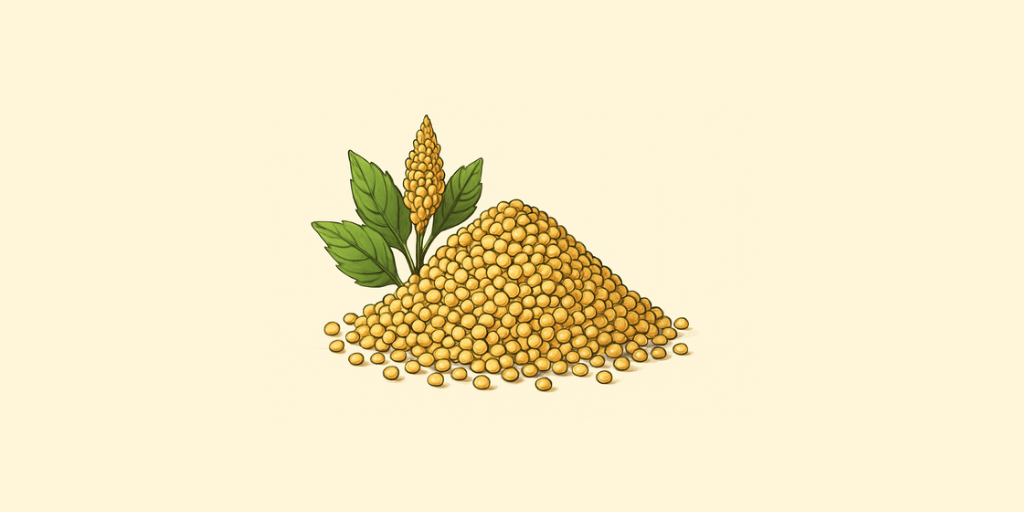
Sanskrit Name: Not listed in Classical Texts
Devanagari Name:क्विनोआ
Botanical Name: Chenopodium quinoa
English Name: Quinoa
Description
Quinoa, pronounced “Keen-wah” or “ke-NO-ah,” is a highly nutritious grain rich in essential amino acids, proteins, and monounsaturated fats. It is free from gluten and has a low glycemic index, enhancing its health advantages.
Including quinoa in your diet can support weight loss due to its high fiber content, which promotes satiety and helps prevent overeating. It also has anti-obesity properties by reducing fat absorption and boosting energy expenditure.
In hair care, quinoa is valued for its high protein levels, which nourish hair follicles and strengthen them. The minerals found in quinoa aid in retaining moisture and combating dandruff.
However, it’s important to consume quinoa in moderation as it is calorie-dense, and excessive intake may lead to weight gain. Individuals with grain allergies should consult a healthcare professional before adding quinoa to their diet.
Benefits – through the lens of Ayurveda
Quinoa (Chenopodium quinoa) is not mentioned in classical Ayurvedic texts like Charaka Samhita, Sushruta Samhita, or Bhavaprakasha Nighantu as it is native to South America and was not known in ancient India.
Main Chemical Constituents
- Saponins
- Quercetin
- Kaempferol
- Phytic acid
- Polyphenols
Nutritional Components
- Protein
- Fiber
- Magnesium
- Manganese
- Phosphorus
- Folate (Vitamin B9)
- Iron
- Zinc
Medical Conditions(Relief)
- Quinoa is a nutrient-dense, gluten-free seed that is rich in protein, fiber, and essential amino acids.
- It is an excellent food for weight management, helping to provide satiety and support healthy metabolism.
- Quinoa is also beneficial for digestive health due to its high fiber content, which promotes regular bowel movements and relieves constipation.
- It supports heart health by improving cholesterol levels and reducing blood pressure.
- Quinoa is also rich in antioxidants, which help combat oxidative stress.
- Quinoa is also known to help regulate blood sugar levels, promote digestive health, and support weight management due to its high fiber content.
- Additionally, it is a gluten-free grain that supports overall vitality and provides energy.
Medical Conditions(Avoid)
- Quinoa should be avoided by individuals with sensitivity to saponins, compounds found in the outer coating of quinoa, as they may cause digestive discomfort.
- People with kidney disease should consult their healthcare provider before consuming quinoa regularly, as it contains oxalates that may affect kidney function in some individuals.
References
- Navruz-Varli S, Sanlier N. Nutritional and health benefits of quinoa (Chenopodium quinoa Willd.). Journal of cereal science. 2016 May 1;69:371-6.
- Bastidas EG, Roura R, Rizzolo DA, Massanés T, Gomis R. Quinoa (Chenopodium quinoa Willd), from nutritional value to potential health benefits: an integrative review. Journal of Nutrition & Food Sciences, 2016, vol. 6, num. 3. 2016 Mar 2.
- Srujana MN, Kumari B, Suneetha W, Prathyusha P. Processing technologies and health benefits of quinoa. The Pharma Innovation Journal. 2019;8(5):155-60.
- Pasko P, Zagrodzki P, Barton H, Chlopicka J, Gorinstein S (2010a) (وٴect of quinoa seeds (Chenopodium quinoa) in diet on some biochemical parameters and essential elements in blood of high fructose-fed rats. Plant Foods Hum Nutr 65: 333-338.
- Pasko P, Barton H, Zagrodzki P, Izewska A, Krosniak M, et al. (2010) (وٴect of diet supplemented with quinoa seeds on oxidative status in plasma and selected tissues of high fructose-fed rats. Plant Foods Hum Nutr 65: 146-151.
- De Carvalho FG, Ovidio PP, Padovan GJ, Jordao Junior AA, Marchini JS, et al. (2014) Metabolic parameters of postmenopausal women aіer quinoa or corn flakes intake- a prospective and doublé-blind study. Int J Food Sci Nutr 65: 380-385.
- McRae MP (2013) Betaine supplementation decreases plasma homocysteine in healthy adult participants: a meta-analysis. J Chiropr Med 12: 20-25.
- Ross AB, Bruce SJ, Blondel-Lubrano A, Oguey-Araymon S, Beaumont M, et al. (2011) A whole-grain cereal-rich diet increases plasma betaine, and tends to decrease total and LDL-cholesterol compared with refined-grain diet in healthy subjects. British Journal of Nutrition 105: 1-12.
- Jenkins DJ, Kendall CW, McKeown-Eyssen G, Josse RG, Silverberg J, et al. (2008) (وٴect of a low-glycemic index or a high-cereal fiber diet on type 2 diabetes: a randomized trial. JAMA 300: 2742-2753.

