
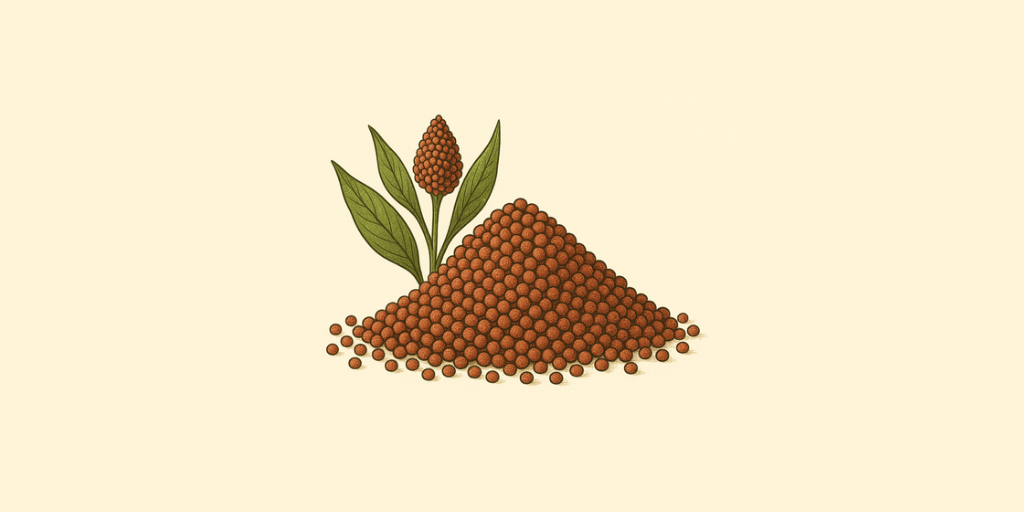
Sanskrit Name:Ragi
Devanagari Name:रागी
English Name: Finger Millet
Description:
Ragi, also known as Finger Millet, is an exceptionally nutritious grain. It boasts a high content of proteins, vitamins, minerals, and calcium. Due to its rich nutrient profile and fiber, it is deemed beneficial for infants.
Ragi aids in regulating blood sugar levels, making it a suitable choice for those with diabetes. Additionally, its calcium and mineral content supports bone health.
As per Ayurveda, Ragi is effective in managing cholesterol levels because of its ability to reduce Ama (toxins). Consuming Ragi flakes for breakfast and chapatis made from Ragi flour is recommended for weight management due to their high fiber content.
Applying a paste of Ragi flour mixed with milk on the face can help diminish wrinkles. It contains collagen and antioxidants that combat signs of aging.
Benefits:
- Ragi is a rich source of calcium, iron, and fiber, making it particularly beneficial for bone health and managing anemia.
- It helps in regulating blood sugar levels, making it ideal for diabetic individuals.
- Ragi also supports digestive health by promoting regular bowel movements and is used to improve skin health and aid in weight management.
Medical Conditions(Relief):
- Ragi is an excellent source of calcium, iron, and fiber, making it a nutritious food for improving bone health and preventing osteoporosis.
- It helps in regulating blood sugar levels, making it beneficial for individuals with diabetes.
- Ragi also supports heart health by lowering cholesterol and improving circulation.
- The high fiber content aids in digestion, preventing constipation and promoting healthy bowel movements.
- It is a great option for individuals trying to lose weight, as it provides satiety and helps control appetite.
Medical Conditions(Avoid):
- Ragi should be avoided by individuals with gluten sensitivity or celiac disease, as it may contain trace amounts of gluten.
- People with kidney stones or high oxalate levels should consume ragi in moderation due to its oxalate content.

