
Ayurvedic Name: Pama
Description
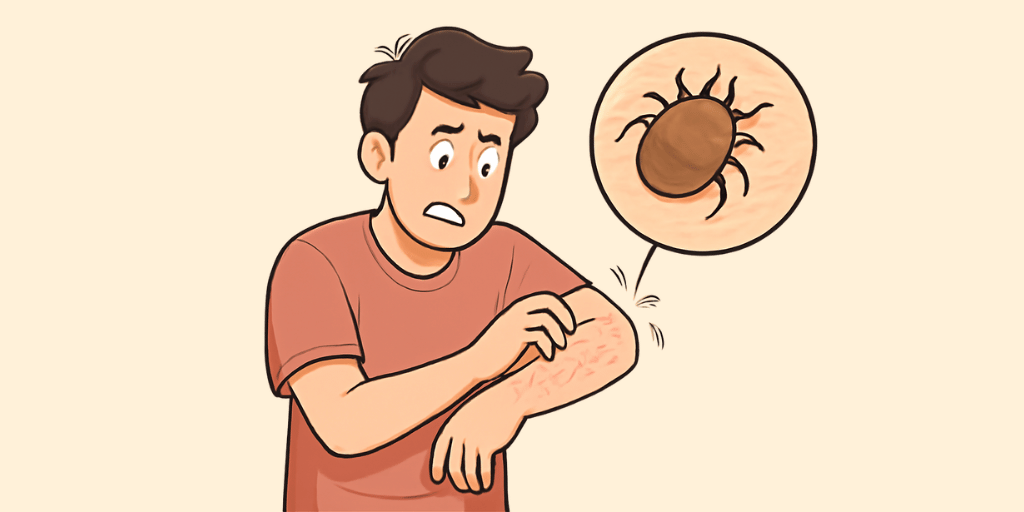
This is a small, itchy, fluid-filled vesicular eruption, often seen in clusters. It is Pitta-Vata dominant, which leads to burning, itching, and scaling. It correlates with Scabies, Dyshidrotic Eczema, or Herpes Simplex. Ayurvedic treatment includes Gandhak Rasayana, Avipattikar Churna, and Aloe Vera gel or Triphala paste as external applications.
Signs & Symptoms
- Pama involves Kushta (Skin Lesions)
- Rukshata (Dryness)
- Shotha (Swelling)
- Kandu (Itching)
- Dourbalya (Weakness).
Diagnosis:
Bacterial Culture of Skin Lesions
Risk Factors
- Dietary Factors: Eating heavy, greasy, or spicy foods can increase the risk of Pama (skin infections and fever). A diet low in nutrients and high in inflammatory foods can contribute to weakened immunity and poor skin health.
- Lifestyle Factors: Poor hygiene, stress, and inadequate rest can increase susceptibility to Pama. Exposure to pollutants and lack of hydration can exacerbate the condition.
Complications
- Skin Infections (Pama): Red, swollen areas on the skin that are often painful or infected.
- Rashes (Vicharchika): Itchy rashes that spread across the skin due to infection or allergies.
- Dehydration (Twak Rukshata): Dry skin and dehydration as a result of ongoing infection.
Epidemeology:
Pama (Skin Eruptions) is often caused by internal imbalances or infections, with a higher prevalence in individuals with poor diet or compromised immunity. The condition is more common in tropical climates with high humidity.
References:
- Shukla V, Tripathi R D, Vaidyamanorama hindi commentary, Charaka Samhita of Agnivesha, Chaukhambha Sanskrit Pratishthan, Delhi,2009, Vol. II, Ch. Chi. 7/30, P. 185.8.
- Hari Sadashiv Shastri Paradakar. Ashtang Hridayam Sutrasthan 15/15. Chaukhambha Surbharati Prakashan; 2002, p. 235.9.
- Hari Sadashiv Shastri Paradakar. Ashtang Hridayam Chaukhambha Surbharati Prakashan; 2002, chikitsa sthana 1/ 48, 49.10.
- Sharma SP, editor. Hindi translation. 7th ed. Varanasi: Chaukhambha Amara BharataPrakashana; 1977. “11th Adhyaya. Uttarasthana” Sharangadharasamhita; p. 415.11.
- Charak Samhita-Agnivesa Vol.1 by Prof.Ravi Dutt Tripathi with the Vaidyamanorama Hindi Commentary, edited by Acharya Vidyadhar Shukla, Sutrasthana chapter 26/66 Atreyabhadrakapiya adhyay, Pg no.376, 2nd Edition, Published by Chaukhamba Sanskrit Pratisshthan, Varanasi 2007
- https://www.ijacare.in/index.php/ijacare/article/download/205/166/

