
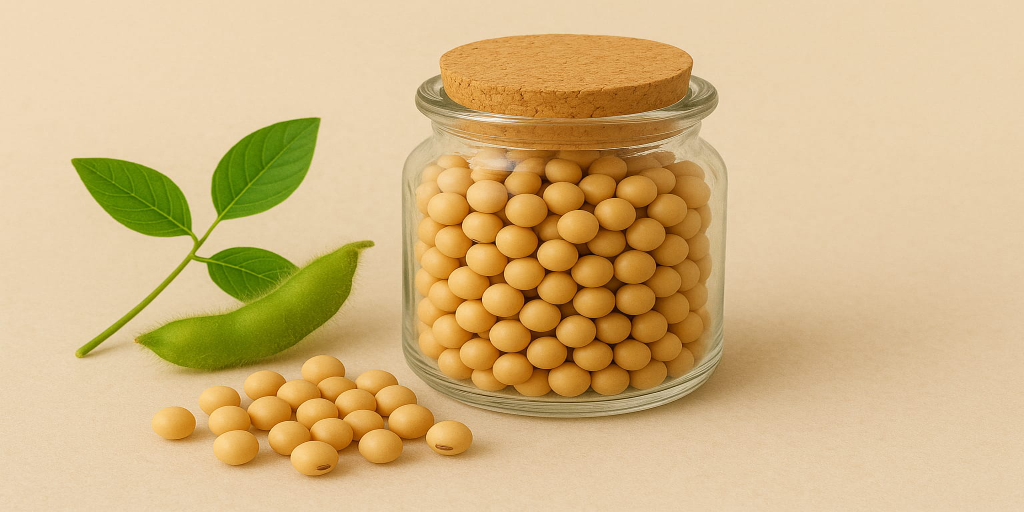
Sanskrit Name: Not listed in Classical Texts
Devanagari Name:सोयाबीन
Botanical Name: Glycine max
English Name: Soybean
Description
Soybean, also known as soya or soya bean, is a highly valued legume recognized globally for its dense nutritional profile and wide-ranging applications. Rich in plant-based protein, soybeans contain all essential amino acids and is widely consumed in various forms such as soya chunks, soy milk, tofu, roasted soybeans, and refined soybean oil. With a protein content of approximately 36–40 grams per 100 grams, it is a preferred dietary source for vegetarians and vegans.
In addition to protein, soybeans are packed with dietary fiber, calcium, magnesium, zinc, phosphorus, and iron. Soybean oil is commonly used in cooking and commercially traded, with terms like CBOT soybean oil, soybean oil rate, and soybean oil futures reflecting its global market demand. Soy milk is popular among individuals with lactose intolerance as a dairy substitute.
The nutritional value of soybeans extends to cardiovascular, metabolic, and musculoskeletal health. Its antioxidant and isoflavone content helps regulate blood sugar levels, support bone density, improve lipid profiles, and assist in hormonal balance, especially beneficial during menopause. Topical use of soybean oil may also contribute to skin health and hair vitality.
Benefits – through the lens of Ayurveda
Not mentioned in classical Ayurvedic texts, as it is not native to ancient India and was introduced much later through global agricultural exchange.
Main Chemical Constituents
- Isoflavones (Genistein, Daidzein)
- Lecithin
- Saponins
- Omega-3 fatty acids
- Phytosterols
Nutritional Components
- Protein (36–40 g per 100 g)
- Dietary fiber
- Calcium
- Iron
- Magnesium
- Potassium
Medical Conditions(Relief)
- Soybean is a rich source of plant-based protein, making it an excellent option for vegetarians and vegans. It contains all essential amino acids and is beneficial for muscle repair and growth.
- Soybeans are also rich in isoflavones, which are plant compounds that help regulate estrogen levels, making them useful for managing symptoms of menopause.
- Soybeans support heart health by lowering cholesterol and promoting healthy blood pressure.
- They also help in managing blood sugar levels, making them beneficial for individuals with diabetes.
- Soybeans are also beneficial for managing blood sugar levels, promoting healthy digestion, and supporting bone health due to their calcium content.
Medical Conditions(Avoid)
- Soybeans should be avoided by individuals with soy allergies.
- People with thyroid disorders should consume soy in moderation, as the isoflavones in soy can interfere with thyroid function in some cases.
- Pregnant and breastfeeding women should consult their healthcare provider before consuming large quantities of soy.
References
- Qin P, Wang T, Luo Y. A review on plant-based proteins from soybean: Health benefits and soy product development. Journal of Agriculture and Food Research. 2022 Mar 1;7:100265.
- Friedman M, Brandon DL. Nutritional and health benefits of soy proteins. Journal of agricultural and food chemistry. 2001 Mar 19;49(3):1069-86.
- Dukariya G, Shah S, Singh G, Kumar A. Soybean and its products: Nutritional and health benefits. Journal of Nutritional Science and Healthy Diet. 2020;1(2):22-9.
- D’Adamo CR, Sahin A. Soy foods and supplementation: a review of commonly perceived health benefits and risks. Altern Ther Health Med. 2014 Jan 1;20(Suppl 1):39-51.
- Jayachandran M, Xu B. An insight into the health benefits of fermented soy products. Food chemistry. 2019 Jan 15;271:362-71.
- Barnes S. Evolution of the health benefits of soy isoflavones. Proceedings of the Society for Experimental Biology and Medicine. 1998 Mar;217(3):386-96.

