
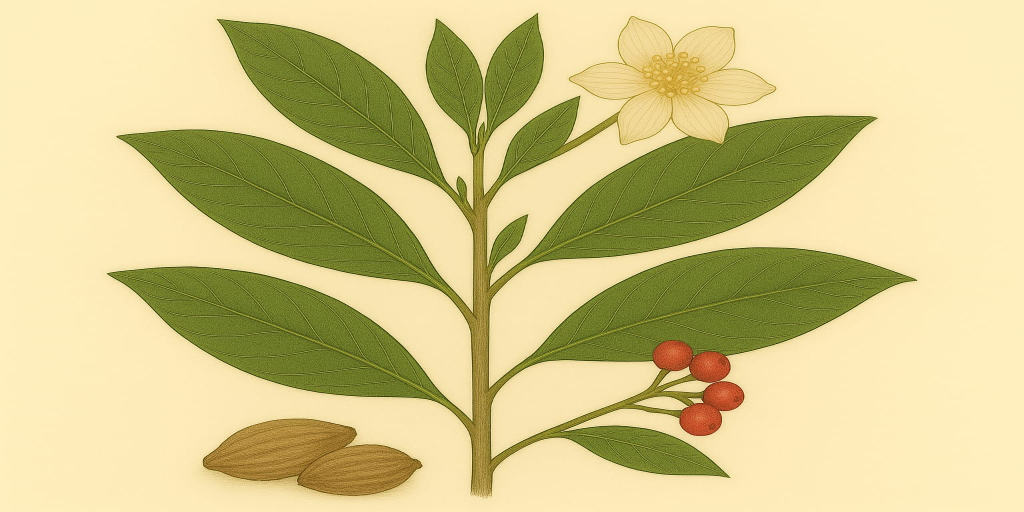
Sanskrit Name:Vidanga
Devanagari Name:विडंग
English Name: Embelia
Description:
Vidanga, also known as Embelia ribes, is a climbing shrub found in the tropical regions of India and Southeast Asia. The plant has small, oval-shaped leaves and produces black berries that are used for medicinal purposes.
Vidanga is best known for its anthelmintic, anti-inflammatory, and antioxidant properties. It is primarily used to treat parasitic infections, particularly intestinal worms, by acting as a natural dewormer.
It is also used for digestive health, treating gas, bloating, indigestion, and improving digestive fire (Agni). Vidanga is effective in treating respiratory issues, such as cough, asthma, and bronchitis, by clearing mucus from the airways and reducing inflammation.
The herb helps balance Vata and Pitta doshas, promoting digestive health, skin health, and overall well-being.
Benefits:
- Vidanga is known for its potent antimicrobial, anti-inflammatory, and detoxifying properties.
- It is commonly used to treat intestinal worms and parasitic infections due to its natural anthelmintic effects.
- Vidanga also supports digestive health by improving gut function, alleviating symptoms like bloating, and relieving indigestion.
- It is beneficial for skin health, especially for treating acne and fungal infections, and promotes detoxification by cleansing the liver and supporting overall immune health.
Medical Conditions(Relief):
- Vidanga is primarily known for its antimicrobial, anti-inflammatory, and digestive properties.
- It is commonly used to treat digestive disorders like constipation, bloating, and indigestion.
- Vidanga also supports detoxification by eliminating toxins from the body and improving liver function.
- It has antibacterial properties that help fight infections, especially those affecting the gastrointestinal tract and skin.
- Vidanga is also used in Ayurvedic treatments to promote weight loss by improving digestion and metabolism.
Medical Conditions(Avoid):
- Vidanga should be avoided during pregnancy, as it has mild uterotonic effects that may lead to complications.
- Individuals with allergies to any part of the Embelia ribes plant should avoid using it.
- It may also cause digestive upset, so it should be used cautiously in individuals with sensitive stomachs.

