
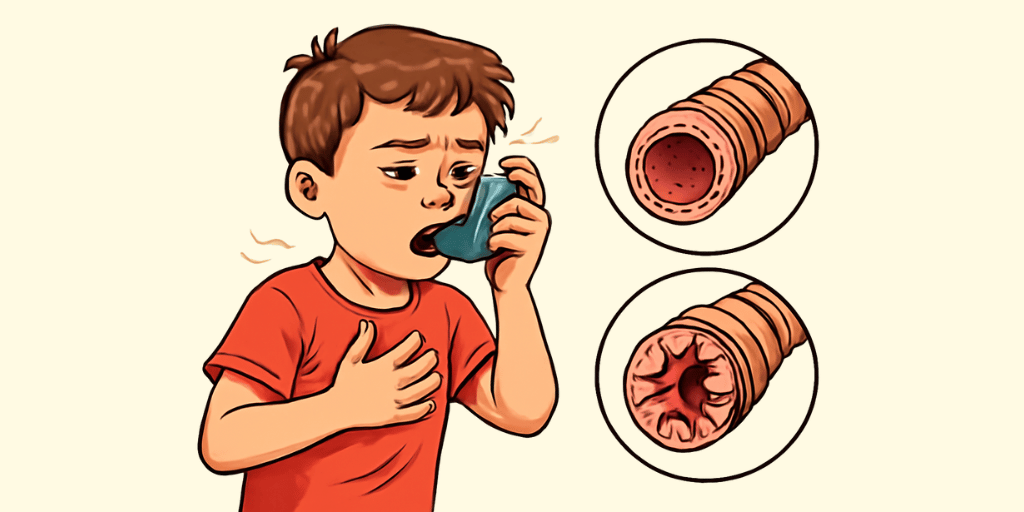
Ayurvedic Name: Tamak Shwas
Description:
Tamak Shwas is bronchial asthma, where Vata and Kapha obstruct the respiratory passages, causing breathlessness, wheezing, and coughing. Ayurveda prescribes breathing exercises, herbal inhalations, and expectorant herbs like Vasaka and Yashtimadhu.
Signs & Symptoms:
- Tamak Shwas presents with Shwasa (Breathlessness), causing difficulty in breathing, especially during exertion or at night.
- There is often Kasa (Cough) with a wheezing sound, especially during an attack.
- The individual may experience Chinta (Anxiety) and a sense of tightness in the chest.
- In Ayurveda, the condition is associated with Kapha and Vata dosha imbalances, leading to the accumulation of Kapha in the lungs, resulting in Shwasa (Breathlessness) and Sannipata (mixed) symptoms.
- This is often accompanied by Kandu (Itching) in the chest and throat, along with a sensation of Daha (Burning) in the respiratory tract.
Diagnosis:
Spirometry Test
Risk Factors:
- Dietary Factors: Excessive consumption of cold, heavy, or oily foods can lead to respiratory issues such as Tamak Shwas (asthma). Foods that increase mucus production, like dairy, and those that worsen inflammation, like spicy or fried foods, can trigger or worsen symptoms.
- Lifestyle Factors: Exposure to environmental allergens, pollutants, and irritants can increase the risk of asthma. Stress, lack of exercise, and poor sleep habits can also contribute to respiratory dysfunction.
Complications:
- Asthma (Tamak Shwas): Difficulty breathing and wheezing due to inflammation in the airways and lungs.
- Coughing (Kasa): Persistent dry or productive cough caused by lung irritation.
- Shortness of Breath (Shwasa Sankocha): Difficulty in breathing due to restricted airflow in the lungs.
Epidemeology:
Tamak Shwas (Asthma) is a chronic respiratory condition that affects individuals exposed to environmental pollutants, allergens, or tobacco smoke. It is more common in children and adults with a family history of asthma or allergies.
References:
- Pt. Kashinath Shastri & Dr. Gourakha Nath Chaturvedi, Charak Samhita, Vidhyotini Hindi Commentry, Vol-2, Hikkashwasa Chikitsa Adhyaya 17, Chaukhamba Sanskrit Sansthan, Varanasi Reprint 2017.
- Kaviraj Dr. Ambikadatta Shastri, Bhaisajyaratnavali, Vidhyotini Hindi Commentry, Vol-1, Kasa Chikitsa Prakaran 15/127-129 & Hikka-Shwasa Chikitsa Prakaran 16/44-45, Chaukhamba Sanskrit Sansthan, Varanasi 16th edition 2002.
- Clinical research protocols for traditional health sciences, Central Council for Research in Ayurveda & Siddha
- Santavelkarkuljen Damodarbhatt Shri pad Sharma, Yajurveda Samhita Sutra. 25/2, Published by Vasant Shripad Salvelkar, Mumbai, Edition VI, Year of Publication 2003
- https://jaims.in/jaims/article/view/2227/2904

