
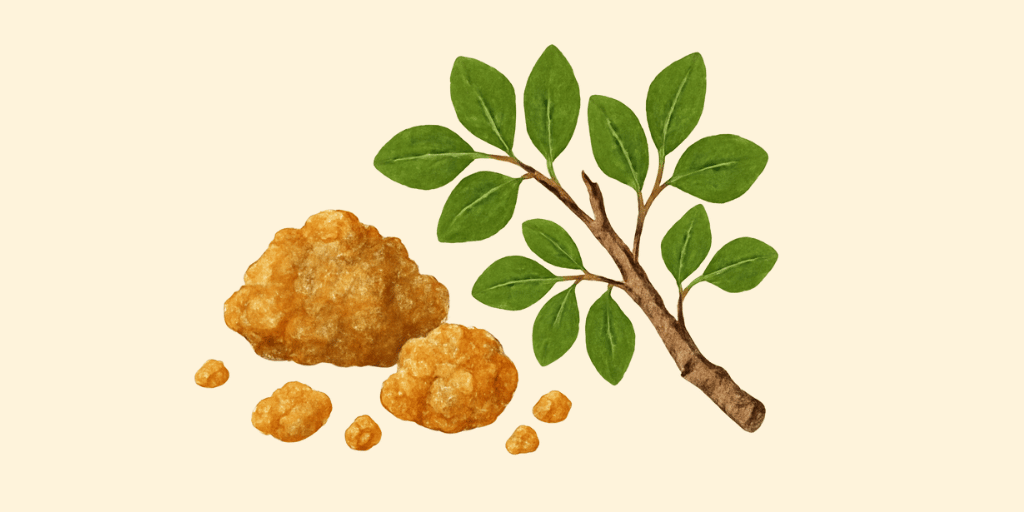
Sanskrit Name: Guggul
Devanagari Name: गुग्गुल
English Name: Guggul
Description:
Guggul, also known as Commiphora wightii, is a small tree found in the dry regions of India, Pakistan, and Africa. It produces a resin called guggul, which has been used in traditional medicine for centuries. The tree has small, aromatic leaves and yellowish flowers.
Guggul is widely recognized for its anti-inflammatory, analgesic, antioxidant, and antimicrobial properties. The resin of Guggul is primarily used for its anti-inflammatory effects, which help treat joint pain, arthritis, rheumatism, and muscle soreness.
Guggul is also used to reduce cholesterol levels and support cardiovascular health. Its antioxidant properties help in reducing oxidative stress and inflammation.
Additionally, Guggul is known to support liver health, detoxification, and weight management by promoting fat metabolism. It helps balance Kapha dosha, improving circulation, immune function, and digestive health.
Benefits:
- Guggul is known for its anti-inflammatory, analgesic, and detoxifying properties.
- It is widely used to treat joint pain and arthritis by reducing inflammation.
- It supports heart health by helping reduce cholesterol and triglyceride levels.
- It also helps in weight management by boosting metabolism and promoting fat loss.
- It is also beneficial for skin health, improving complexion, and healing wounds due to its antimicrobial effects.
Medical Conditions(Relief):
- Guggul is a potent anti-inflammatory herb that has been traditionally used to treat joint pain, arthritis, and inflammatory skin conditions.
- It helps in reducing cholesterol levels and supporting heart health.
- It is also known for its detoxifying properties and is used to cleanse the body of toxins and improve liver function.
Medical Conditions(Avoid):
- Guggul should be avoided by pregnant women due to its potential to induce contractions and possibly lead to miscarriage.
- It should also be avoided in individuals with hyperthyroidism, as it may stimulate thyroid function excessively.
- People taking blood thinners or with bleeding disorders should avoid Guggul, as it may increase the risk of bleeding.

